Are you feeling behind on AI?
It’s hard not to these days, especially if you spend any time on LinkedIn. Every other post is some tech bro telling us that our jobs are going to be eliminated and that we’re already so behind and oh my God this new tool/update/platform just destroyed all the others, and and and…
It even gets me down sometimes, and I know the game they’re playing at.
Here’s the thing with AI, there’s two groups that are making all the noise:
- AI builders. These are techy people that are building software with AI. This is very likely not you, or you wouldn’t be reading this blog right now.
- AI performers. These are the hype men that are making a lot of big claims and use a lot of buzzwords. They are trying to make you feel behind so you will hire them for their expertise. The problem is, we very rarely see any of that expertise in action.
And then there’s the rest of us. We’re excited about the opportunities, a little anxious about what will change, and maybe a little terrified of robot overlords.
And when you remove all the urgency (that is actually just marketing), using AI to enhance your work is pretty achievable when you understand a few core concepts.
What You Really Need To Know About AI
Aaaand here are those concepts.
1 | Know what the tool really is.
First, you need to understand how AI functions. This will help you learn not to over trust it or under use it.
Well, let me back up. It’s really how LLMs function. AI is a general term, but most people are referring to Large Language Models (ChatGPT, Claude, Gemini, etc.) when they say AI. And LLMs are basically just really good autocomplete. It reads what you type, guesses what you probably want next, and generates a response that sounds right based on patterns it learned from lots of text.
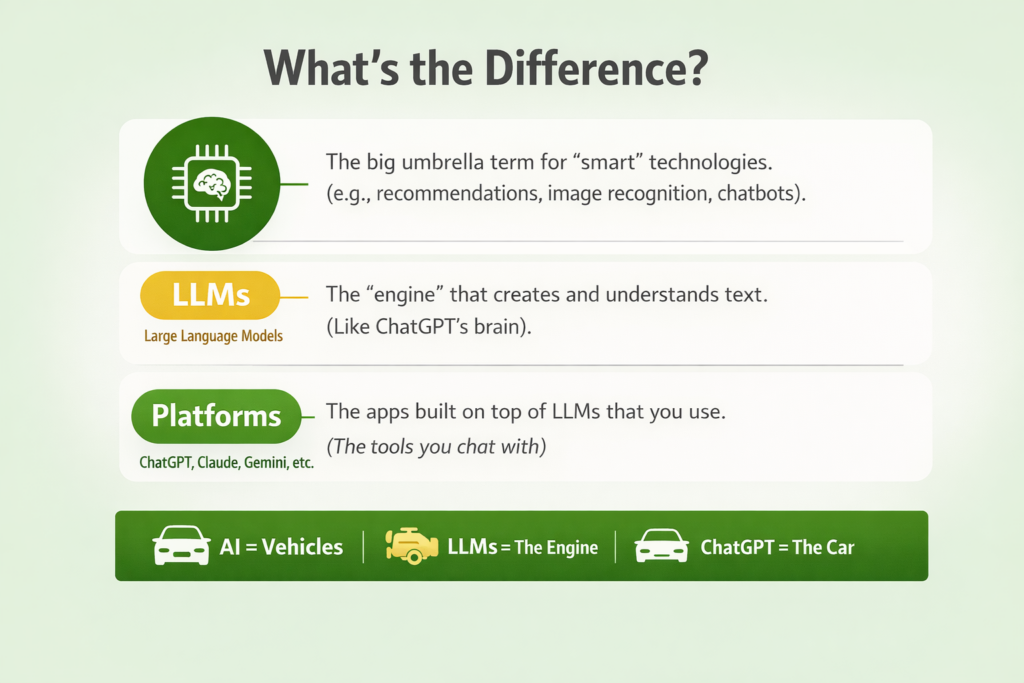
In short: it sounds good, but sometimes it’s completely BS.
When you understand what LLMs are doing, you can extrapolate that:
- It can be wrong, but will sound really confident about it.
- The responses are based on your inputs. Garbage in, garbage out as they say.
- It doesn’t fact check itself.
The bottom line here is that you can’t trust it as a source of truth.
2 | Know how the tool wants to receive information.
My favorite thing is to just brain dump into ChatGPT. And, while there is space for that, it’s not the best way to get a good answer.
Because remember, an LLM is just a fancy auto-complete. AI doesn’t read your prompt, think about it, and then write a response. It generates as it goes. It starts producing an answer based on the first clear instructions it sees. If later parts of your message change the goal, add constraints, or reveal important context, the AI may already be heading down the wrong path unless you’ve organized that information up front.
I once asked it why it didn’t think through the whole prompt and then craft the best answer on its own prioritization and it said, “because you didn’t tell me to.”
What it really wants is a creative brief. And it wants that brief in a specific order:
- Deliverable
- Audience
- Goal (what success looks like)
- Key takeaways (what it must include)
- Tone/voice
- Constraints/guardrails (what to avoid, length, format, facts it must use, sources)
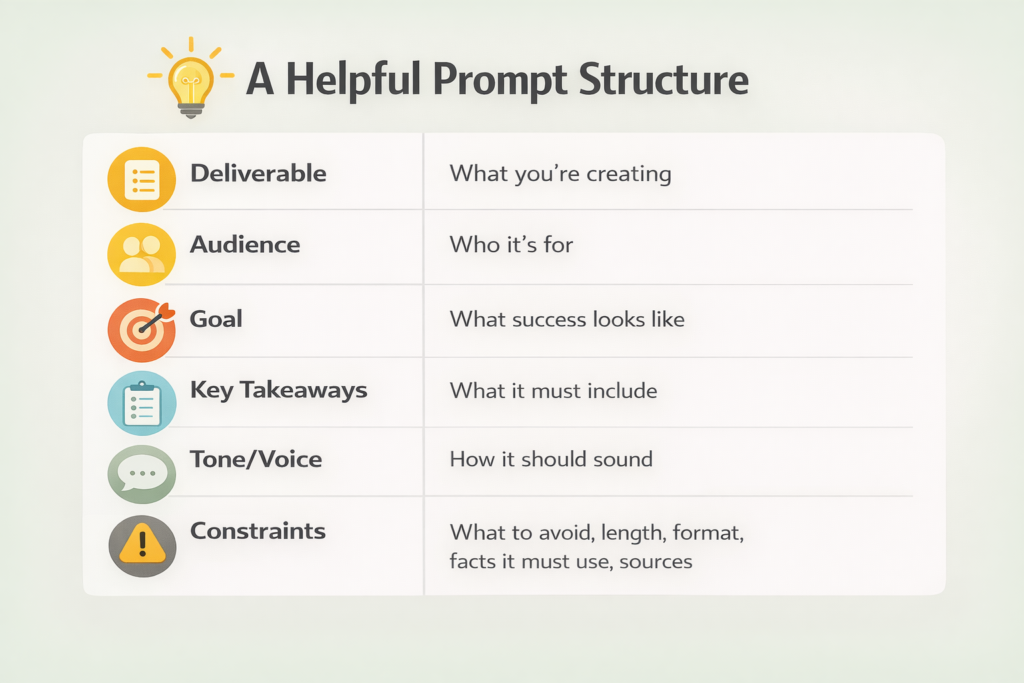
Start with what you want, then who it’s for, then what “good” means, then the content, then the vibe, then the rules.
Honestly? Respect. This is exactly what I want when talking to a client about a marketing or communications project. The difference is that I can reorder it or make sense of someone else’s brain dump in a way that AI can’t.
3 | What goes in it and what comes out both matter. A lot.
There are two separate issues here. One is privacy and another is brand reputation.
(In) Privacy
You may feel like you and AI are all alone together, just cozy chums chatting it up. But in reality, you are in a space that other people have access to. Whether that’s someone else on the team that shares a password with you or the company that owns whatever LLM you are working in or, idk…I’m assuming hackers could get in there too. Either way, you don’t want to input sensitive information.
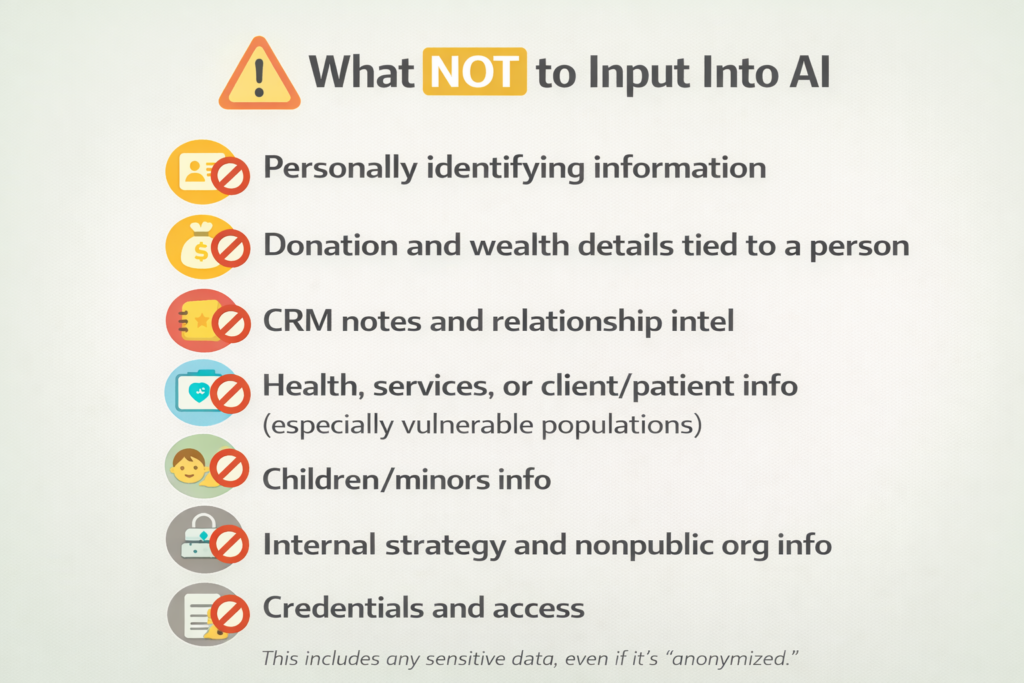
Don’t put anything into AI that you wouldn’t feel comfortable seeing on the front page of the internet.
For nonprofit folks, this especially means:
- Personally identifying information
- Donation and wealth details tied to a person
- CRM notes and relationship intel
- Health, services, or client/patient info (especially vulnerable populations)
- Children/minors info
- Internal strategy and nonpublic org info
- Credentials and access
- Contracts, legal language, and protected documents
(Out) Brand reputation
LLMs will make stuff up. Which means you can’t just take whatever it gives you, plop it on some letterhead, and send it out into the world.
Fundraising is all about trust, and if you send out something that is incorrect (be they facts or even perspectives that don’t align with your organization) you could do a lot of damage.
It’s also good at sounding like it’s saying something when it’s really saying nothing at all. Don’t send hot air out into your community. If you need help writing, let the tool help you write, but the messaging should come from you. Use it as an assistant and a sounding board—not as an expert.
What To Do Next
Not to sound like ChatGPT, but take a breath. (Why is it always telling me to take a breath??)
You’re not behind. And if you want to keep it that way, keep playing around with it, knowing:
- what it actually is (not an intelligent source of truth)
- how to talk to it (not like a human) and
- that you need to be careful with what information you put into it and you need to apply your human judgement to what comes out of it.
Remember: you are the expert. AI is just a tool that can help you.